
Don’t Clock Out is a peer support community created out of a dire need for acknowledging and addressing the moral toll of caring for people within systems of harm.
Read our Shared Community Commitments

Our mission is to accompany healthcare workers as they navigate the deeply human work of caring for others.
Our community offers weekly virtual peer support groups led by healthcare workers.
We engage in public advocacy through ethical storytelling and moral distress education.
Our work functions as a safety net solution, holding the complexity of suicide and building networks of care.
Our support groups are donation based, no one turned away for lack of funds. Consider donating to keep our work sustainable.
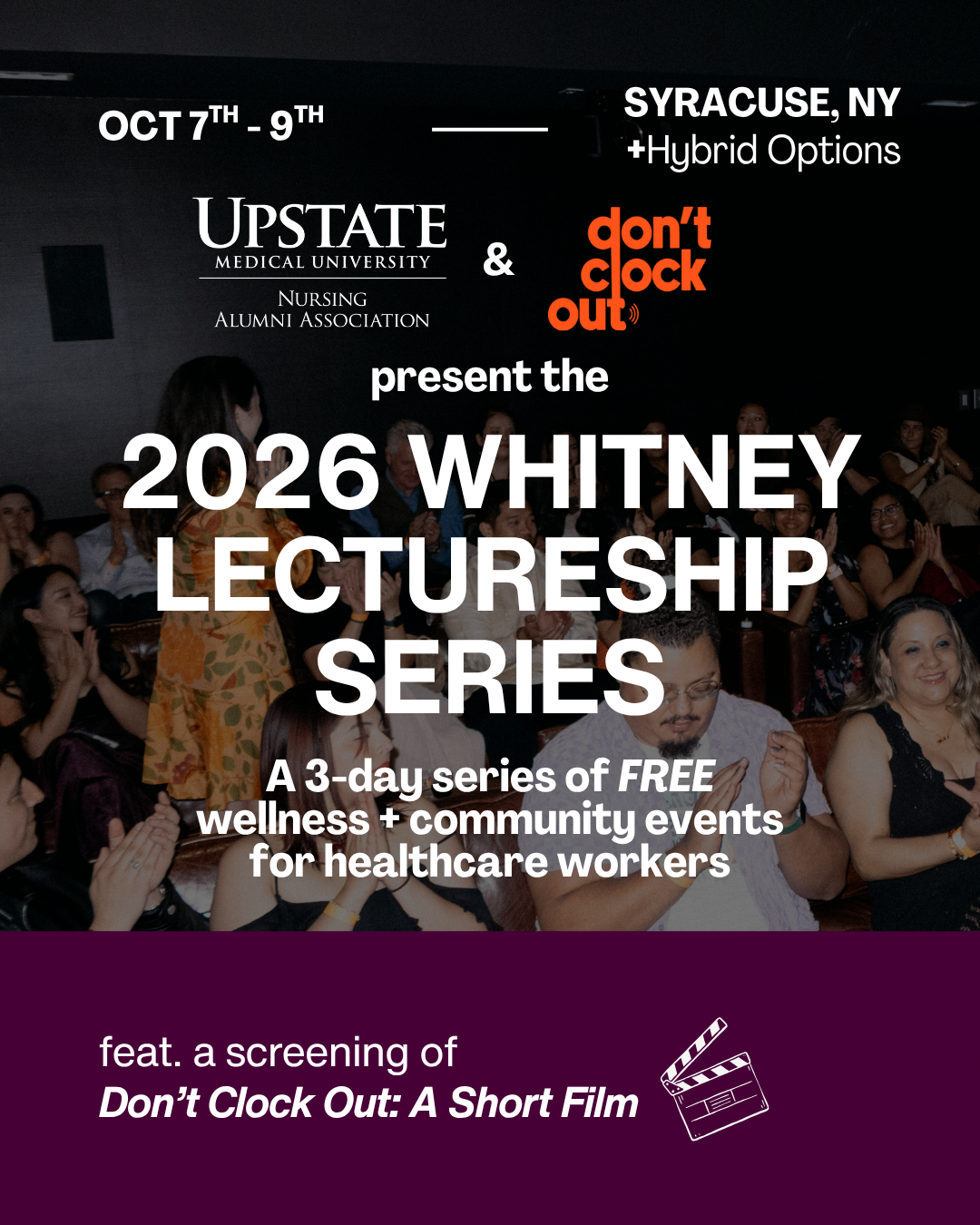
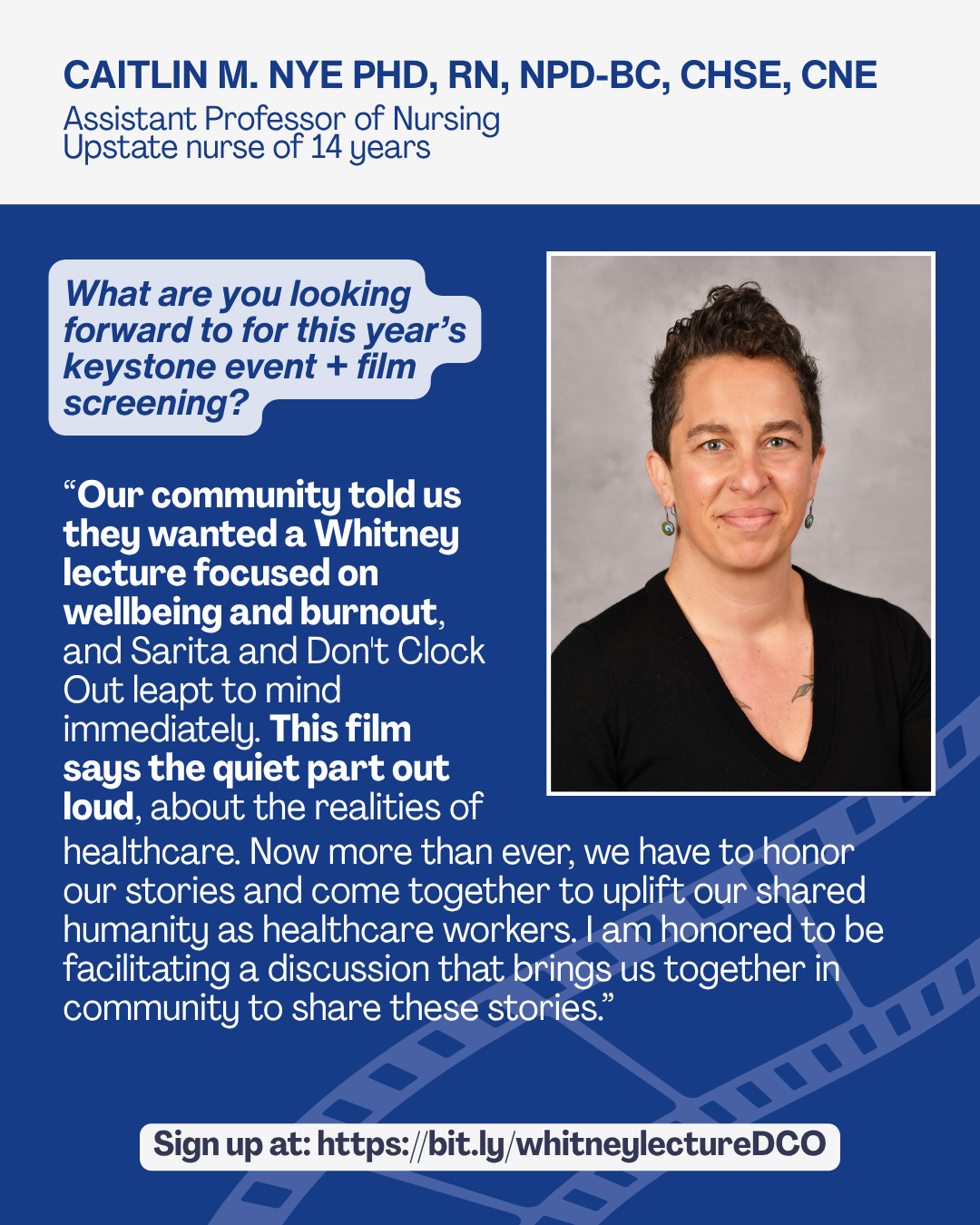
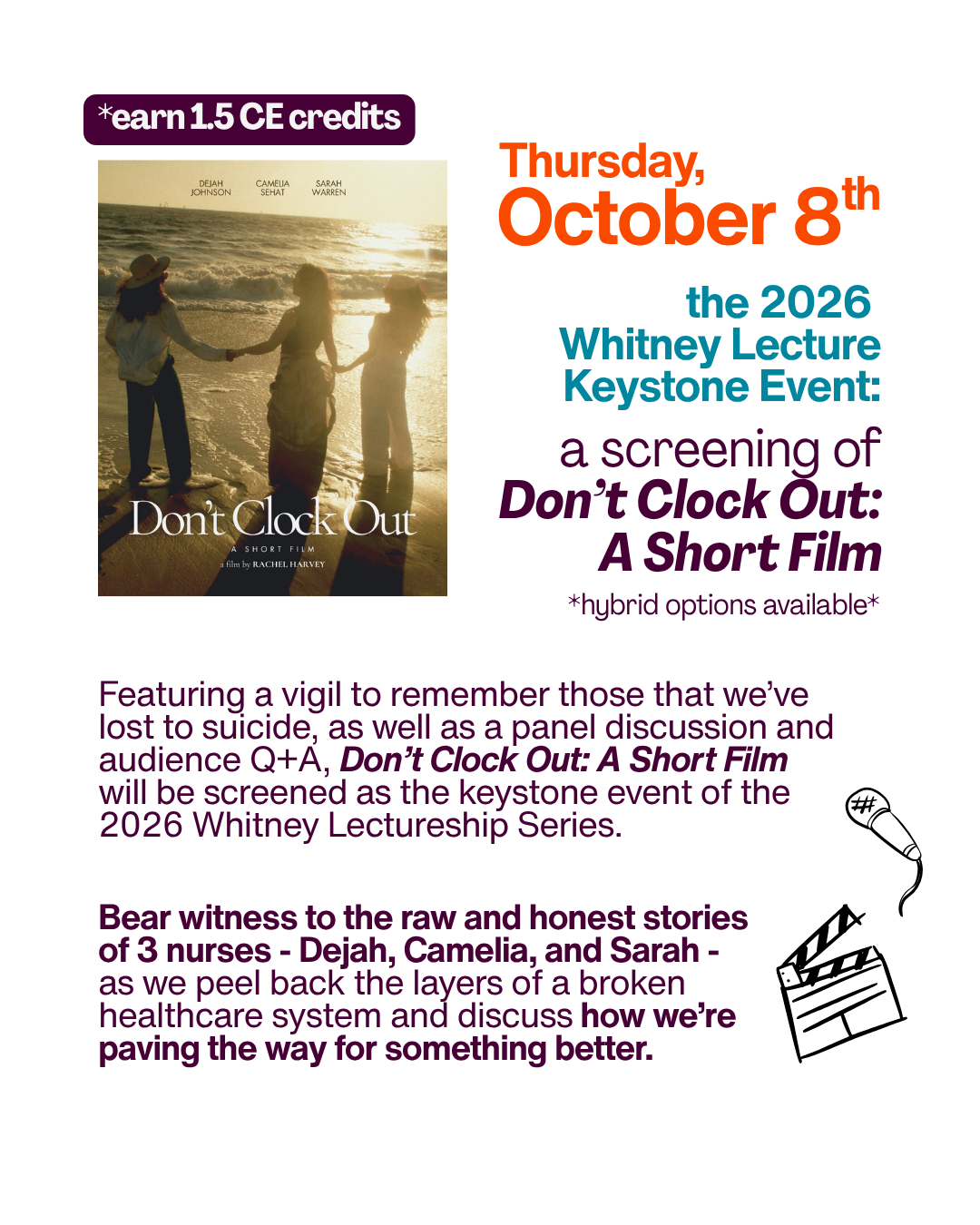
A 3-Day Series of FREE Wellness + Community Events for Healthcare Workers
October 7–9, 2026 | Syracuse, NY and Virtual
Healthcare workers spend their days caring for others.
This three-day series creates space to pause, reflect, connect, and consider how we can build stronger communities of care for ourselves and one another.
Presented by the Upstate Nursing Alumni Association in partnership with Don’t Clock Out, the 2026 Whitney Lectureship Series will explore moral distress, healthcare worker well-being, community, and the realities of working within a complex healthcare system.
This event is open to ALL healthcare workers + Hybrid Options are available!
Subscribe to our weekly “Recap and Resources” newsletter and access:
Insights from our weekly support groups
Offerings and announcements
Current research on Moral Distress
Opportunities to get involved
Podcast and Book Recommendations
Resources and events from our collaborators
Peer Support Group and Event Calendar
At the center of the design are two healthcare workers in conversation.
Surrounding them, the heart and brain symbolizing emotional and intellectual connection, each person feeling seen and understood on multiple levels.
Branches extend from the heart and neurons from the brain, meeting in the middle to represent how, through shared human experiences, we can connect, support one another, empathize, and grow together.
Don't Clock Out's merch line has finally arrived, in collaboration with Artery Ink!
Meet the artists…
Gloria and Mara are the artists, founders, and owners of Artery Ink, a women + minority owned business offering one-of-a-kind, hand-drawn designs!
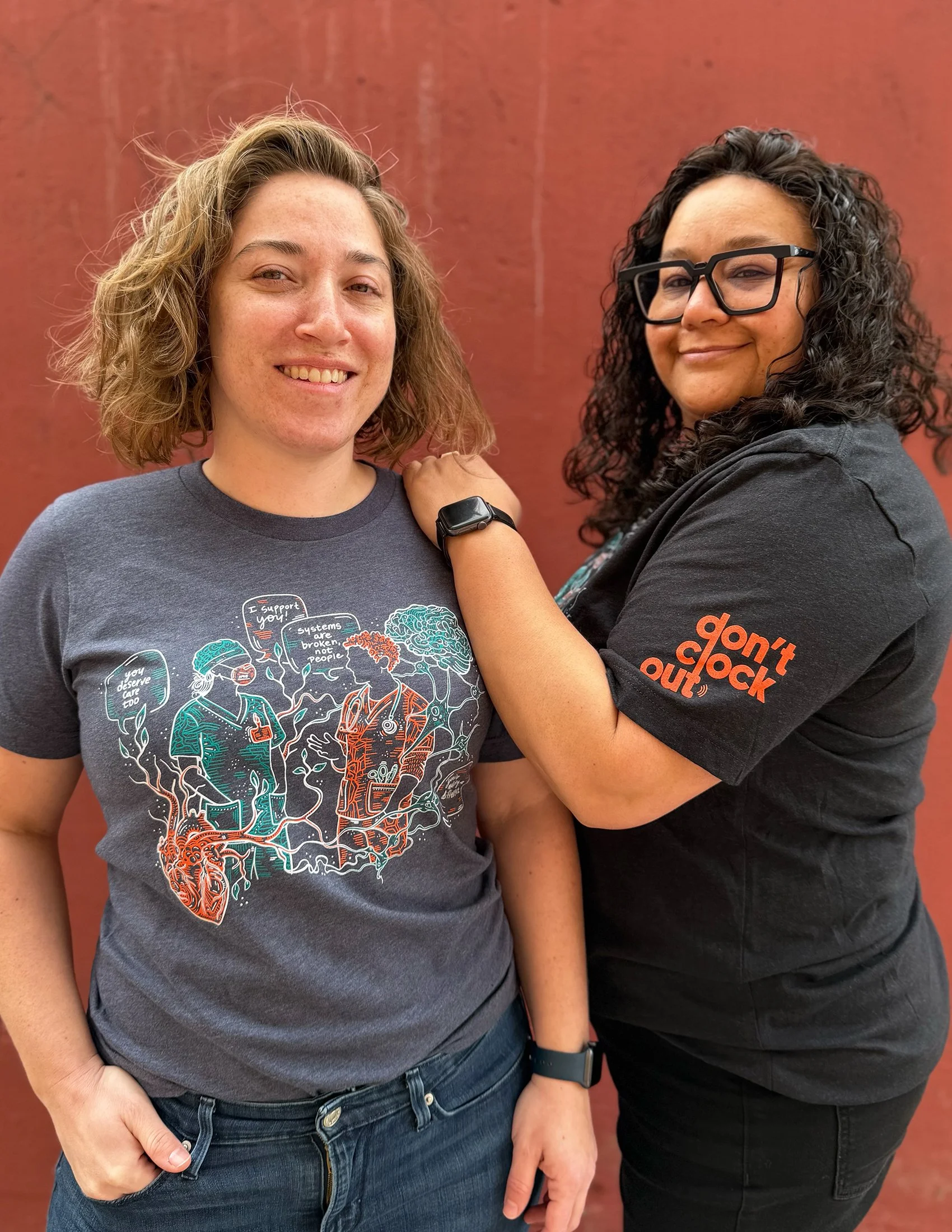
Did you know? Artery Ink also creates CUSTOM apparel for healthcare teams…
Click HERE to start a custom apparel request.
What healthcare workers are saying


Watch the trailer for “Don’t Clock Out: A short film”
Caring for patients begins with caring for ourselves and each other.
How can you help? Donate to fund a peer support group!
Your donation to Don't Clock Out directly supports our mission to accompany healthcare workers in navigating deeply human work.
With your generosity, we are able to provide:
Weekly Peer Support Groups: Our peer support groups offer healthcare workers a safety net outside of their workplaces and institutions and a community that deeply understands.
Short Film Distribution: Our first documentary short film highlighting the toll of moral distress in healthcare is meant to impact meaningful change through collective truth, demanding accountability from harmful systems and imagining a new way forward.